Dormant Fruit-Tree Care: Pruning & Oil Spray Steps You Can Finish Before Valentine’s Day
This website contains affiliate links. Some products are gifted by the brand to test. As an Amazon Associate, I earn from qualifying purchases. The content on this website was created with the help of AI.
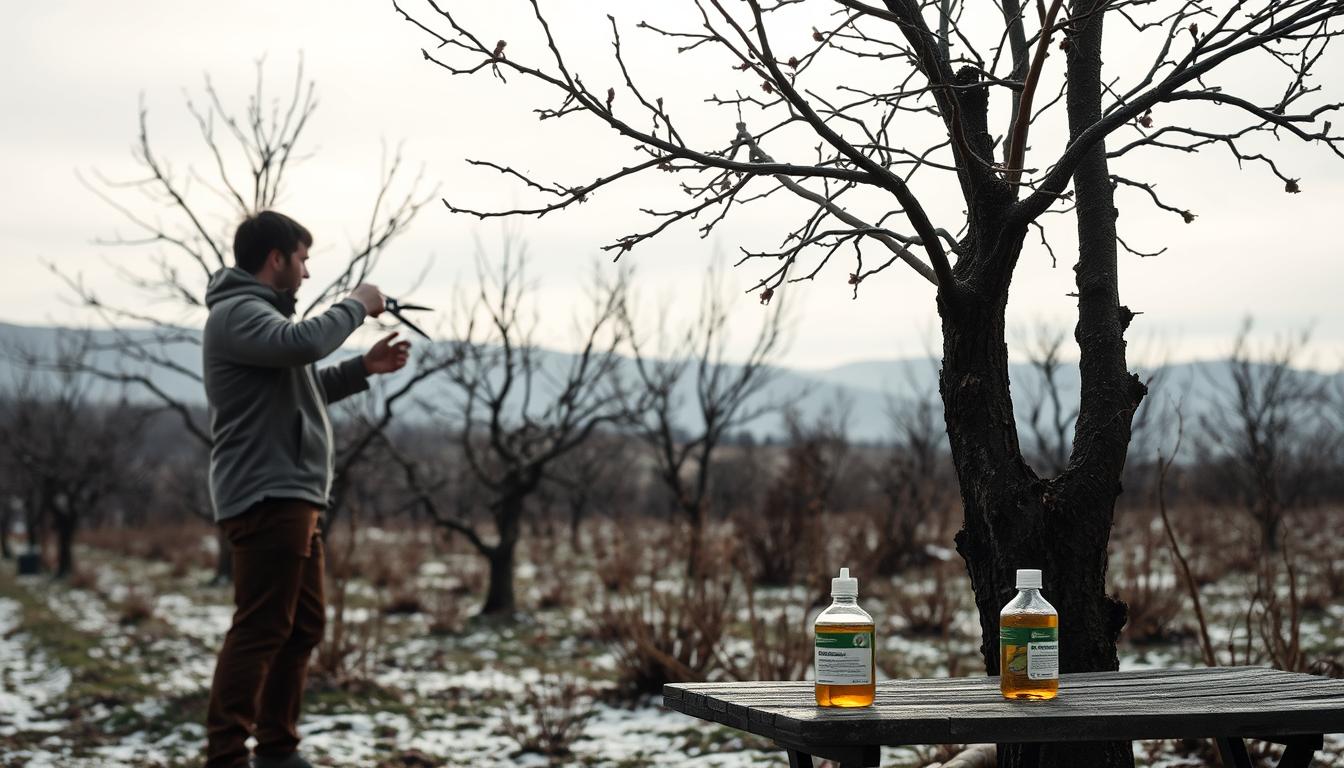
Valentine's Day is coming, but you still have time to care for your fruit trees. February is perfect for pruning and using dormant oil spray. This helps keep your trees safe from diseases and pests.
When it's not too cold, you can spray dormant oil on your trees. This prepares them for a great harvest.
By following these easy steps, you can keep your trees healthy and productive. This fruit tree care is key for a successful garden. We'll show you how to make your garden beautiful and fruitful.
Why Winter Dormancy Is the Perfect Time for Fruit Tree Maintenance
Winter is when fruit trees are dormant, making it the best time for care. You can prune and apply dormant sprays without worrying about disease or pests. This is because the trees are less active and more resilient during this period.
Pruning during dormancy helps wounds heal before spring. It also lets you check for damage or disease easily. This way, you can fix problems early on.

Winter care for your fruit trees prepares them for a strong growing season. Dormant spraying is especially useful. It keeps pests and diseases away, helping your trees stay healthy and grow well when it gets warmer.
Winter tree care might seem like a task, but it's vital for your trees' health and productivity. By doing dormant spraying and pruning in winter, you'll enjoy a great harvest and beautiful blossoms in spring.
Essential Tools and Supplies for Dormant Fruit Tree Care
Before you start pruning and caring for your dormant fruit trees, gather the right tools and supplies. The correct equipment makes the task easier and more efficient. This ensures your trees get the best care.
You'll need various tools to prune and maintain your fruit trees well. The most important tools include loppers, hand saws, and hand clippers. These help you cut and trim branches with precision. A rake is also needed for clearing away pruned limbs and debris.
Choosing the Right Pruning Shears and Saws
When picking pruning shears and saws, choose high-quality tools for cutting branches. Look for sharp, durable blades that make clean cuts and last through pruning.
Safety Gear Recommendations
Remember to prioritize your safety while pruning and caring for your fruit trees. Wear good gloves to protect your hands from thorns and splinters. Also, consider head and face protection to avoid falling debris. A sturdy ladder helps you safely reach high branches.
Along with these essential tools, you'll need a few more supplies. A tool sharpener keeps your pruning shears and saws sharp. And don't forget drinking water to stay hydrated while working.
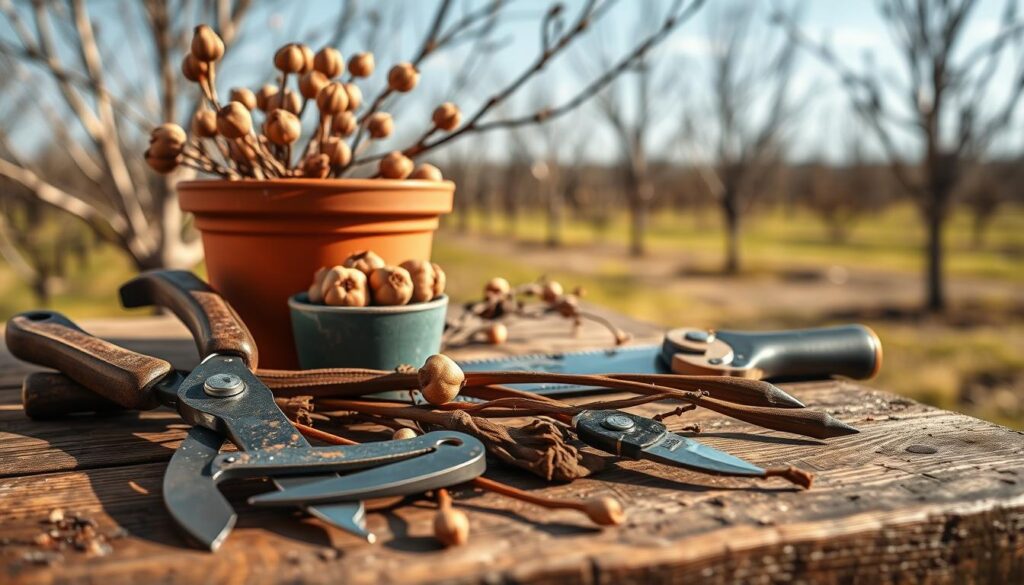
With these essential tools and supplies, you're ready to care for your dormant fruit trees. Regular pruning and care are key to a healthy and productive fruit tree pruning schedule. This is part of your fruit tree maintenance routine.
Assessing Your Fruit Trees Before Winter Work
Before starting winter fruit tree care, check your trees' health. This is key to spotting any problems before pruning and applying sprays.
Look for disease, pests, or damage on your fruit trees. Remove dead or diseased branches to stop disease spread. Also, watch for pest signs like eggs or pests on branches or trunks.
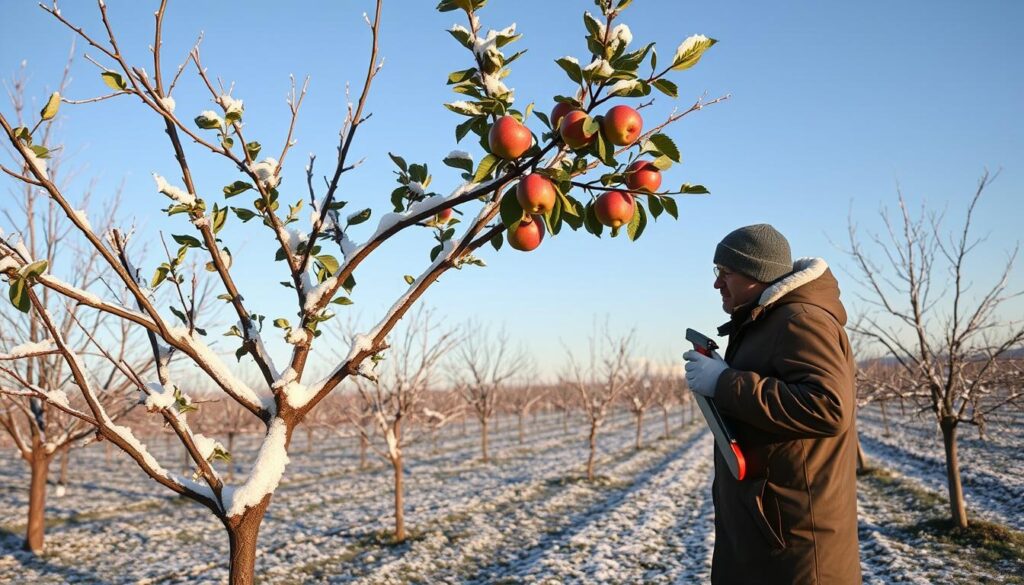
Clear snow from your trees' bases to keep rodents away. Also, remove debris and weeds around your trees to keep them healthy.
Assessing your fruit trees before dormant fruit tree treatment helps you know what to do. This care ensures your trees stay healthy through winter and bloom in spring.
Take your time during this check-up. If unsure about your trees, get help from a professional. With proper care, your fruit trees will be ready for winter.
Understanding Your Dormant Fruit Tree Spray Schedule
Fruit tree disease prevention starts with knowing your dormant fruit tree spray schedule. As a fruit tree enthusiast, you know spraying at the right time is key. The dormant season is the best time to apply sprays that protect your trees from diseases and pests.
You should spray your fruit trees with dormant oil two or more times during the season. The exact timing depends on the fruit tree type and your climate. Early and late winter are usually the best times to spray.
Early Winter vs. Late Winter Applications
Early winter applications, done in December or January, control pests and diseases that stay active during winter. Late winter applications, in February or March, get your trees ready for the growing season. Both applications are crucial for comprehensive protection.
Temperature Considerations for Spraying
Temperature is key when spraying your fruit trees. Don't spray when it's below freezing or will be soon. Spray when temperatures are between 40°F and 70°F for the best results.
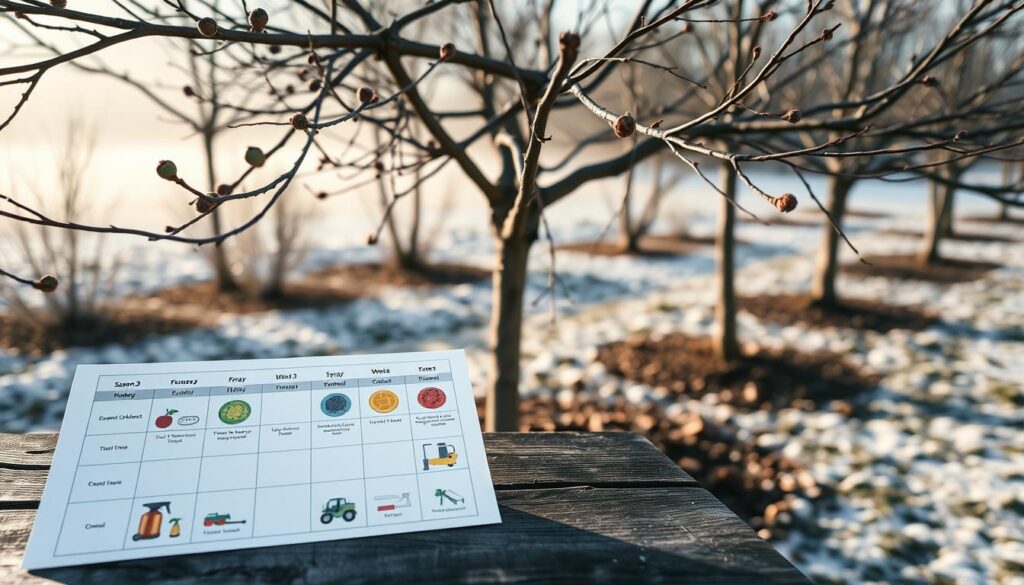
By following a dormant fruit tree spray schedule, you can protect your trees well. Remember, timing and consistency are the keys to successful disease prevention. Always check the weather forecast before spraying and plan your schedule accordingly.
Step-by-Step Dormant Pruning Techniques
Getting your fruit trees ready for the growing season is key. Dormant pruning is a vital step for healthy growth and more fruit. Pruning during the dormant season makes your trees stronger and more fruitful.
Understanding the Basics of Dormant Pruning
Dormant pruning means cutting back certain branches. This lets more sunlight reach the fruiting branches. It also helps the tree grow in a healthy way.
First, find the branches that need pruning. Look for dead, diseased, or damaged ones. Also, remove any branches that rub or cross each other, as they can harm the tree.
- Begin by inspecting your fruit trees for any dead, diseased, or damaged branches.
- Remove any branches that are crossing or rubbing against each other.
- Cut out any weak or spindly growth, focusing on removing old, gray-colored shoots.
- Make clean cuts at a 45-degree angle, about 1/4 inch from the branch collar.
- Remove any suckers or water sprouts that are growing from the base of the tree or along the branches.
By following these steps, your fruit trees will thrive and give you plenty of fruit. Make pruning a part of your fruit tree care routine. Also, keep an eye on your fruit tree pruning schedule to prune at the best time for your tree.
Specialized Pruning Approaches for Different Fruit Trees
Different fruit trees need different pruning methods. Learning these can greatly improve your harvest. It's key to know what each tree needs as you get ready for the growing season.
Peach trees need a lot of pruning. You should cut off a lot of last year's growth. This helps grow new fruiting wood. It's called "thinning" and it leads to more fruit.
Key Pruning Techniques for Various Fruit Trees:
- Apple Trees: Remove diseased, damaged, or crossing branches. This keeps the canopy open.
- Pear Trees: Like apple trees, remove unwanted branches. Also, thin out fruiting branches for better fruiting.
- Peach Trees: Prune more aggressively to encourage new growth and fruit production.
When you prune, cut just above a bud or lateral branch. This helps the tree heal fast and lowers disease risk. The aim is to grow healthy and produce more fruit.
Pruning your fruit trees is important. But, don't forget about dormant spraying. This involves spraying horticultural oil to control pests and diseases when the tree is dormant.
Using both pruning and dormant spraying can keep your fruit trees healthy and productive. Take time to understand your trees' needs. Try new pruning methods to find what works best for you.
Dormant Oil Spray: What It Is and Why It Works
As you get ready for the growing season, knowing about dormant oil spray is key. It's a vital part of dormant fruit tree treatment. It keeps pests and diseases away by covering egg masses and stopping them from hatching.
Dormant oil is safe for birds and bees, making it a good choice for your garden. It covers the tree's branches and trunk. This kills any insects that stayed on the tree over winter. This way, you can prevent pests from coming back in spring.
Using dormant oil spray has many benefits. Here are some main advantages:
- It works well against many pests, like aphids, mites, and scale insects.
- It's safe for different fruit trees, including apples, pears, and peaches.
- It's easy to use, needing only one application during the dormant season.
Adding dormant oil spray to your winter fruit tree maintenance routine is a big step. It helps keep your trees healthy and productive. This simple treatment can greatly improve your trees' health over time.
How to Properly Mix and Apply Dormant Oil Sprays
To keep your fruit trees healthy, it's important to know how to use dormant oil sprays. These sprays are a key part of winter fruit tree care. They help prevent diseases and pests that could harm your trees.
Mixing dormant oil sprays requires the right concentration. You'll mix horticultural oil with water, following the product's instructions. The mix usually ranges from 2% to 4%, but it can vary based on the product and tree type.
Step-by-Step Application Guide
- Choose a day when the temperature is above freezing to ensure the spray adheres properly to the trees.
- Mix the dormant oil with water according to the product's instructions, taking care to achieve the correct concentration.
- Spray the mixture thoroughly on your fruit trees, making sure to cover all branches, trunks, and the areas around the trees.
- Use a sprayer that can reach all parts of the trees, and avoid spraying when it's windy to prevent drift.
For the best results, consider these tips:
- Spray dormant oil sprays in late winter or early spring, before the buds begin to swell.
- Ensure thorough coverage, as missed areas can leave your trees vulnerable to pests and diseases.
- Be cautious not to spray when rain is expected soon, as this can wash off the oil before it has a chance to work effectively.
By following these steps and tips, you can effectively mix and apply dormant oil sprays. This will help protect your fruit trees and keep them healthy. It's a key part of fruit tree disease prevention.
Combining Dormant Sprays with Fungicides: When and How
You might need to mix dormant sprays with fungicides for extra protection on your fruit trees. This is especially true if you've faced disease problems before. Knowing when and how to mix these treatments can help keep your trees healthy and productive.
When to Combine Dormant Sprays with Fungicides
Timing is key when applying dormant sprays and fungicides. You should do this during the dormant season, when trees are less stressed and more open to treatments. For most fruit trees, this means spraying in late winter or early spring, just before buds swell.
A copper-based spray can fight peach leaf curl and brown rot. When mixing dormant sprays with fungicides, it's important to stick to the recommended amounts and guidelines. This prevents over- or under-treating your trees.
To mix dormant sprays with fungicides right, pick the right products and follow the instructions closely. Make sure to read the labels and follow the mixing guidelines. This ensures the sprays work well together.
- Check the labels for compatibility and mixing instructions.
- Follow the recommended application rates to avoid over- or under-treating.
- Apply the sprays during the dormant season for best results.
By mixing dormant sprays with fungicides, you give your fruit trees the protection they need to flourish. Always follow the guidelines and take safety precautions to protect yourself and your trees.
Organic Alternatives for Dormant Fruit Tree Treatment
For those who love organic gardening, there are great alternatives to traditional treatments for dormant fruit trees. You can care for your fruit trees well without using chemical products.
Natural Fertilizers for Fruit Trees
The Natural Gardener recommends using organic fertilizers like Rabbit Hill Farm’s Bud and Bloom or Ladybug fertilizer. These help your trees grow strong and produce fruit without synthetic stuff.
For pest control, organic methods are also good. Neem oil and horticultural oil sprays keep pests away and are safe for organic gardens.
When using dormant oil sprays, follow the maker's instructions. Apply them during the dormant season for best results.
Benefits of Organic Dormant Fruit Tree Care
Choosing organic treatments for your fruit trees is good for them and the planet. Organic care boosts soil health, saves water, and cuts down on chemicals.
Remember, a bit of effort in the dormant season can lead to a big harvest later.
Post-Treatment Care for Your Fruit Trees
After pruning and spraying your fruit trees, it's time for post-treatment care. This care is vital for their health and growth.
Protecting your trees from threats is key. Rodents can harm your trees, especially in winter. Clearing snow away from small trees' bases can prevent rodents from eating the bark, which damages the tree.
Here are more tips for caring for your fruit trees:
- Watch for signs of disease or pests.
- Keep the area around your trees clean and free of weeds.
- Water your trees properly, even in winter.
By following these steps, your fruit trees will thrive. Remember, caring for them after pruning and spraying is just as important.
As you care for your fruit trees, remember that winter tree care is a continuous effort. Stay alert, and your trees will give you a rich harvest.
In summary, post-treatment care means protecting your trees from rodents and other dangers. It also means keeping their surroundings clean and ensuring they get enough water. This way, you'll help your fruit trees grow strong and healthy.
Common Mistakes to Avoid in Winter Fruit Tree Care
To keep your fruit trees healthy, knowing common winter care mistakes is key. Proper care during the dormant season is crucial. Avoiding these errors is as important as following the right steps.
One big mistake is improper pruning. Don't prune above your head — think about where that branch might fall. This simple rule helps keep you safe and your trees healthy.
Another mistake is ignoring pests and diseases. Preventing fruit tree diseases is vital in winter. Regularly check your trees for signs of disease or pests.
- Pruning too much or too little
- Failing to apply dormant oil sprays or fungicides when necessary
- Not inspecting trees regularly for disease or pests
- Ignoring the specific needs of different fruit tree varieties
Knowing these common mistakes helps you avoid them. This ensures your fruit trees get the care they need in winter. Proper care now will help them grow well next season.
For more tips on caring for your fruit trees, including pruning and spray techniques, read on. The next section covers troubleshooting winter fruit tree problems.
Troubleshooting Winter Fruit Tree Problems
Dealing with winter fruit tree issues is key to a good harvest. Even with great care, trees can face problems in winter. Knowing how to spot and fix these issues is vital for their health and fruit.
Identifying Damage - If your plants aren't hardy for your area, they might get damaged or even die. Look for signs like cracked branches or damaged bark. These spots can let in diseases or pests.
Common Winter Issues - Winter brings diseases, pests, and weather damage. For example, if you see fungal diseases, cut off the affected parts to stop it from spreading.
- Check for signs of pests like aphids, scale, or spider mites.
- Look for damage caused by deer, rabbits, or other wildlife.
- Inspect for signs of disease such as fungal growths or blackened areas on the tree.
Addressing the Issues - After finding the problem, act quickly. This might mean pruning, using fungicides, or pest control. It's also a good time to tweak your winter care routine to avoid future problems.
Being proactive and fixing issues fast helps your fruit trees stay healthy. A well-cared-for tree is not just for the fruit. It's also about enjoying your garden's beauty and bounty all year.
Setting Your Trees Up for a Productive Growing Season
By doing dormant fruit tree care, you're getting your trees ready for a great growing season. It's important to watch your trees' health and fix any problems. A good fruit tree care routine, including a timely spray schedule, will help you get a big harvest.
Remember, caring for your trees is an ongoing job. Look out for diseases or pests and act fast to stop them. This way, you'll have healthy, thriving trees that make your garden happy and fruitful.
Stay in your garden, caring for the life you've grown. As the saying goes, "I am the vine; my Father is the Gardener." May your garden grow strong under your care.